


 Home
Home Blog
Blog
Table of Content
- Introduction
- The Problem: You're Losing a Battle You Didn't Know You Were Fighting
- The Consequences: What the Black Hole Actually Costs You
- The Framework: Why Revenue Share Is the Mechanism That Actually Answers This
- What This Looks Like in Practice
- Implementation: Where to Start
- The Bigger Picture: Category Ownership Starts With Naming the Problem
- Frequently Asked Questions
Key Takeaways
- Brokerages are competing with independence itself, not just other brokerages. Agents now have more technology and resources available to operate with greater autonomy.
- Agents increasingly evaluate the value they receive from brokerage affiliation. Commission splits, fees, technology, support, leads, training, and additional earning opportunities all influence whether an agent remains with a brokerage.
- Technology is making independence more achievable. Modern transaction, compliance, marketing, CRM, and AI tools can reduce some of the operational barriers that previously kept agents dependent on traditional brokerage infrastructure.
- Agent departures can create a long-term growth problem. Losing productive agents affects current revenue while also removing potential future referrals, recruits, and leadership opportunities.
- Independent brokerages need to create reasons for agents to stay. Revenue share, stronger support, technology, community, and opportunities to build additional income can make brokerage affiliation more valuable than going completely independent.
For years, brokerage owners have planned their recruiting and retention strategy around one assumption: when an agent leaves, they go to a competitor. New data says that assumption is wrong - and it's costing independent brokerages more than they realize.
A Q1 2026 report from Recruiting Insight, in collaboration with Lone Wolf Technologies, tracked agent migration across nearly 98,000 transactions and found something brokerage leaders weren't watching for. In 9 of 12 brokerage personas studied, more than 30% of departing agents didn't move to a competitor at all. They went independent - dropping their license with a low-cost holding brokerage or hanging their own shingle, walking away from every brand, every tool, and every support system a traditional brokerage offers.
In some brokerage models, that number hit 73%.
Recruiting Insight's Managing Partner Mark D. Johnson called it a "clear signal that agents are re-thinking the value a brand brings versus the cost of affiliation." We'd put it more bluntly: a meaningful share of the agents you're losing aren't being recruited away. They're concluding your brokerage - and every brokerage - isn't worth what it costs.
We're calling this the Independent Black Hole, and if you run an independent brokerage, it's one of the most important numbers in your business you're probably not tracking.
The Problem: You're Losing a Battle You Didn't Know You Were Fighting
Most brokerage owners build their retention strategy around competitive intelligence - watching which national cloud brokerages or franchise models are recruiting hardest in their market, matching splits, matching technology stacks, matching marketing support. That's a reasonable strategy if the threat is competitor-to-competitor movement.
But the Independent Black Hole isn't a competitor problem. It's a value-proposition problem. When an agent leaves your brokerage and doesn't join anyone else, they're telling you something specific: whatever they were paying for - in split, in fees, in compliance overhead - wasn't worth more to them than just keeping the money and handling the risk themselves.
That's a much harder problem to solve with a better split sheet. You can't out-negotiate "I'd rather keep 100% and figure it out myself."
Why This Is Accelerating Now
Three forces are compounding to make going independent more attractive than it's ever been:
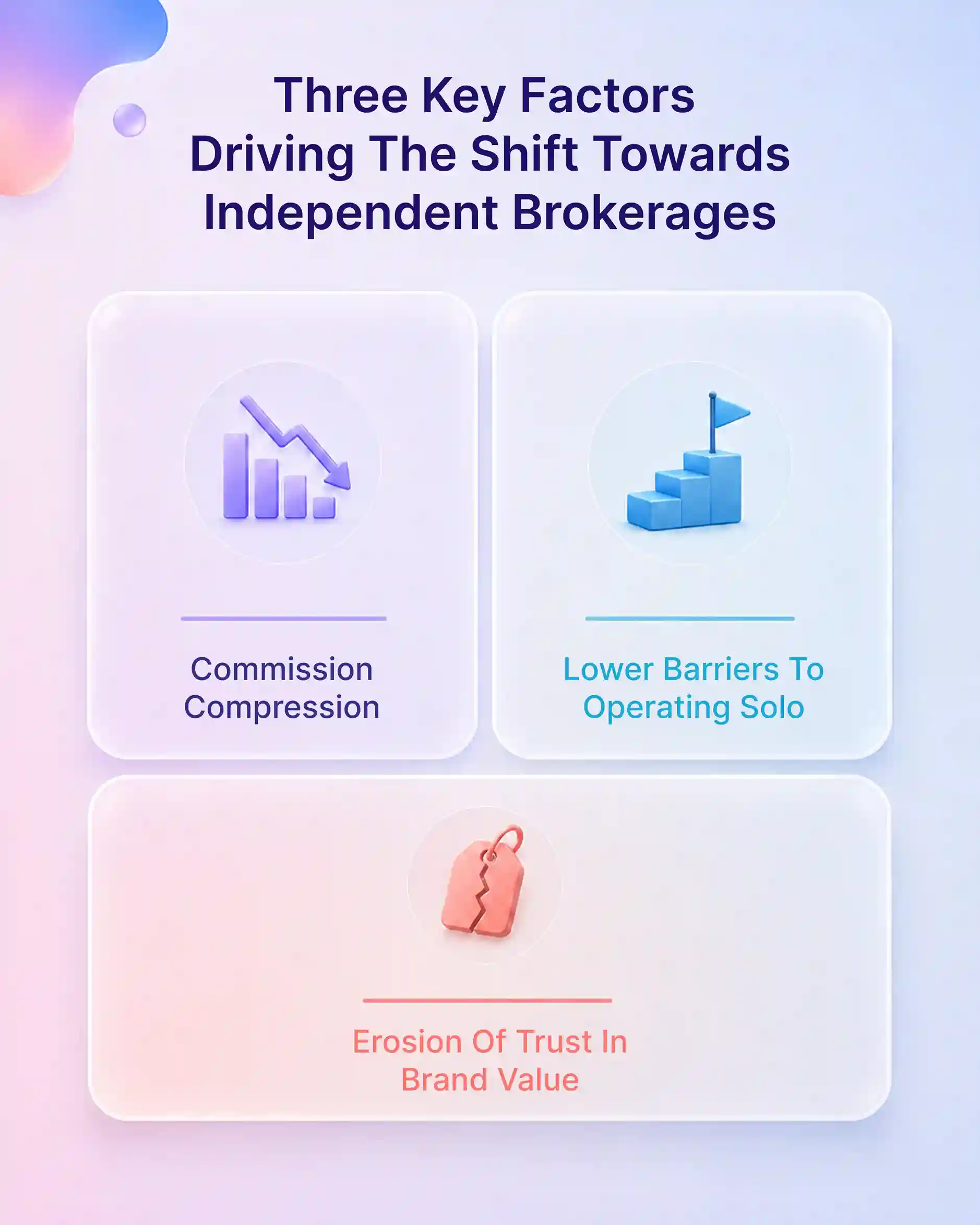
- Commission compression. Since the 2024 NAR settlement, written buyer agreements are mandatory and commission offers no longer appear on the MLS. Analysts project agent commissions could fall 25% to 50% over the coming years, which means every dollar an agent pays in split or desk fees is under more scrutiny than ever.
- Lower barriers to operating solo. Compliance platforms, e-signature tools, and AI-assisted transaction coordination have made it meaningfully easier for a single agent to run their own back office than it was even three years ago.
- Erosion of trust in brand value. Agent mobility data from Q1 2026 shows external moves up 25% quarter over quarter - but a large share of that movement isn't landing anywhere. It's agents testing whether they need a brokerage brand at all.
None of this means agents don't want support. It means they're no longer willing to pay brokerage-level prices for support they perceive as brand prestige rather than tangible value.
The Consequences: What the Black Hole Actually Costs You
It's tempting to write off agents who go independent as low producers who weren't worth keeping. The data doesn't support that. Recruiting Insight's research found that roughly 44% of agents who moved in Q1 2026 were actually growing production before they switched - meaning a significant share of the agents disappearing into the Independent Black Hole are exactly the productive core every brokerage is trying to protect.
Every agent lost to the Black Hole carries a compounding cost:
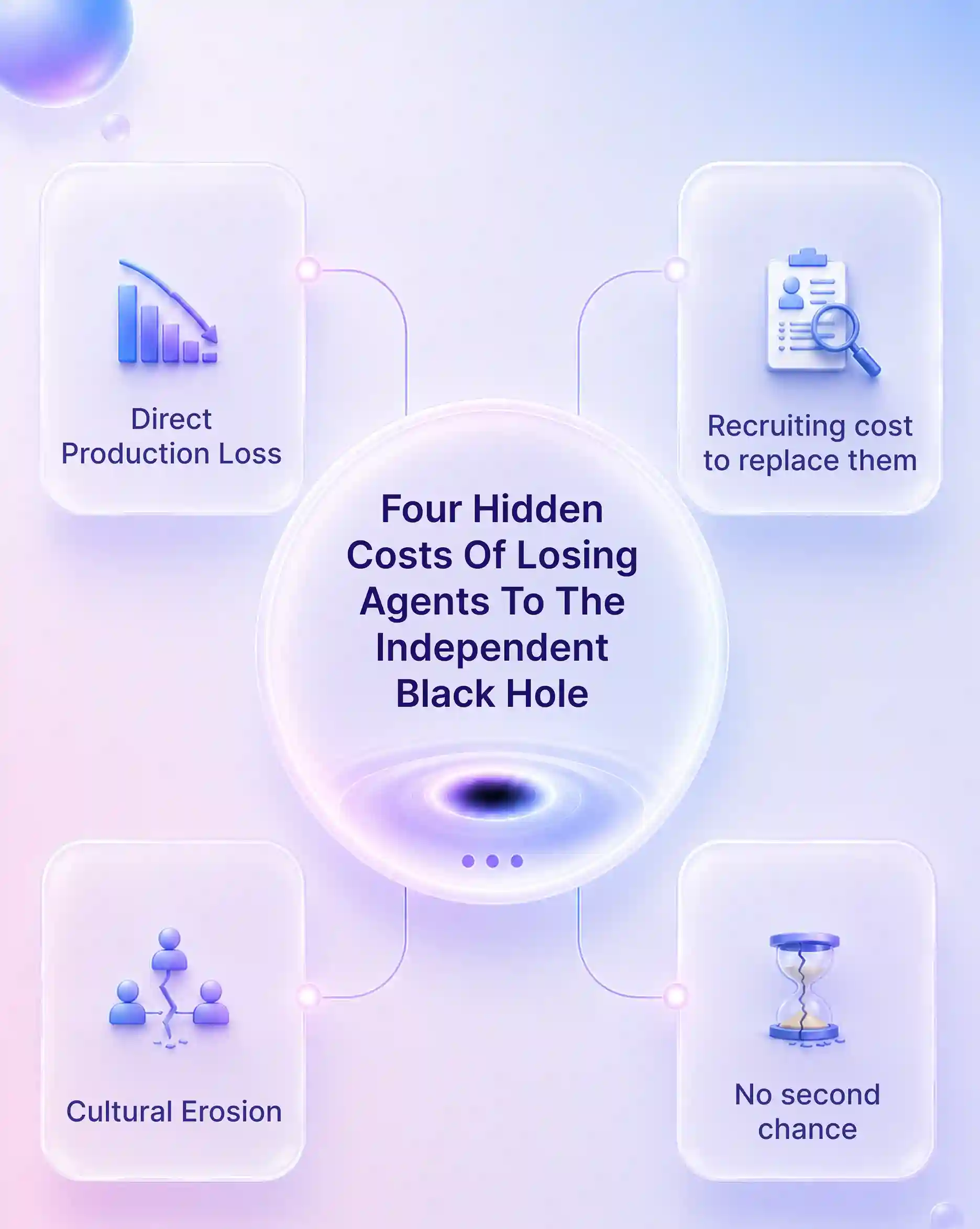
- Direct production loss. Their GCI walks out the door immediately, with no recruiting fee or split-based offset to recover it.
- Recruiting cost to replace them. Sourcing, interviewing, onboarding, and ramping a new agent to the same production level typically takes months and meaningful marketing spend.
- Cultural erosion. Each high-producing agent who concludes "it's not worth it" makes the next agent's exit easier to justify. Retention problems compound socially, not just financially.
- No second chance. Unlike a competitor-to-competitor move, where a relationship and a recruiting conversation might bring the agent back someday, an agent who's gone fully independent has exited the brokerage ecosystem altogether. There's no "win them back" play.
This is precisely the kind of profitability leak we mapped in our recent brokerage profitability research: invisible, recurring, and rarely shown on a P&L line item until it's already done significant damage.
The Framework: Why Revenue Share Is the Mechanism That Actually Answers This
If the Independent Black Hole is fundamentally a value-proposition problem - agents asking "what am I actually getting for this split?" - then the fix has to be a value-proposition answer, not a recruiting tactic. This is where revenue share earns its place as more than a recruiting perk.
A well-built revenue share program changes the math an agent runs when they're tempted to go independent in three specific ways:
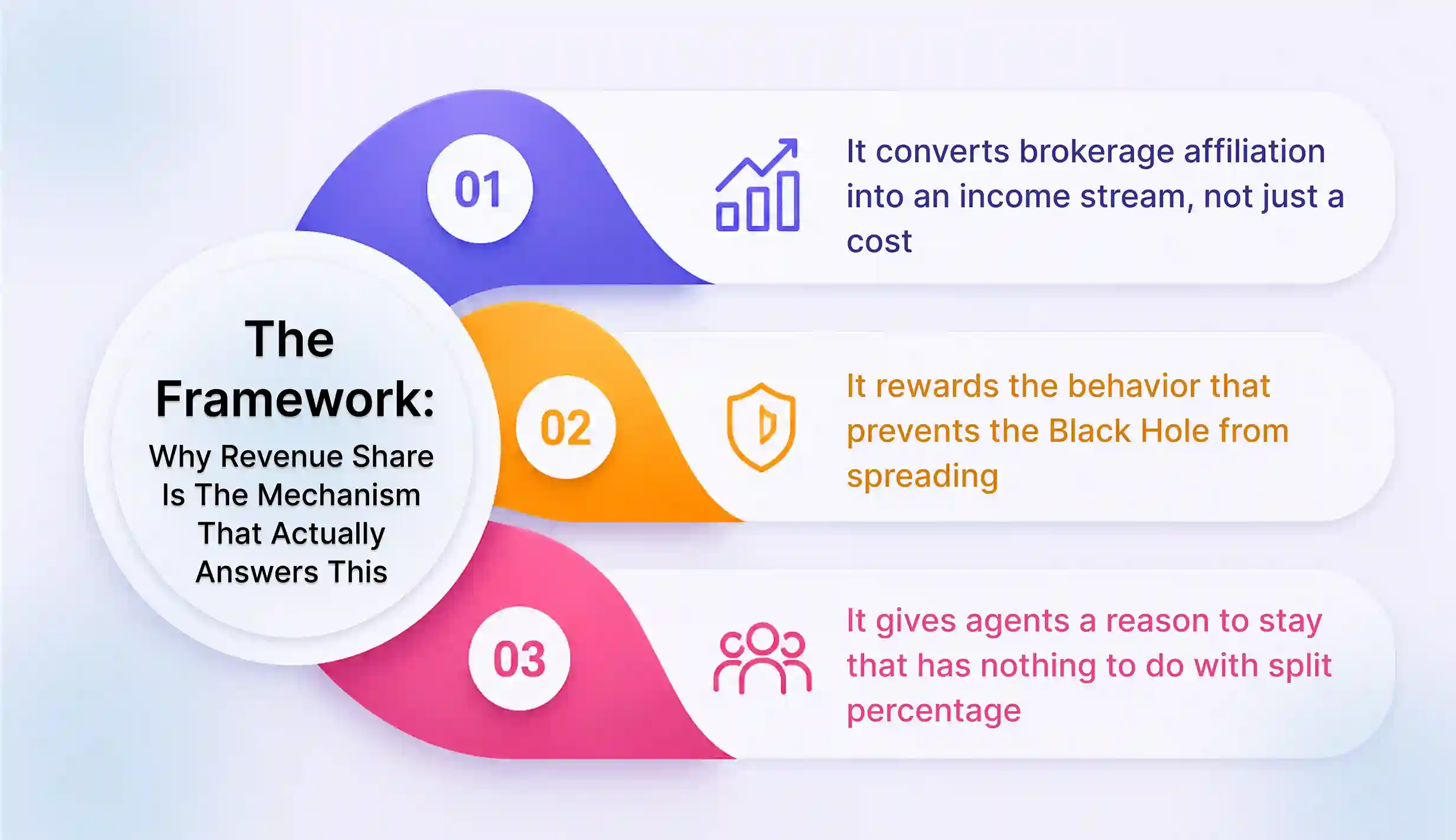
1. It converts brokerage affiliation into an income stream, not just a cost
An agent weighing "stay and pay a split" against "go independent and keep everything" is doing simple subtraction. Revenue share adds a line back to the other side of the equation: ongoing income tied to the agents and production around them, which only exists because they stayed affiliated. That changes the math from subtraction to addition.
2. It rewards the behavior that prevents the Black Hole from spreading
Because revenue share programs typically reward agents for the success of agents they've brought in or mentored, they create a direct financial incentive for your most experienced people to actively keep newer or wavering agents engaged - exactly the social reinforcement that counteracts the "everyone's leaving anyway" mindset that accelerates the Black Hole.
3. It gives agents a reason to stay that has nothing to do with split percentage
Split comparisons are a race to the bottom that independent brokerages can rarely win against larger, better-capitalized models. Revenue share reframes the conversation around long-term, compounding income rather than per-transaction cost - a conversation independent brokerages can absolutely win because it's about relationships and culture, not just balance sheets.
What This Looks Like in Practice
Consider two independent brokerages, both running 80 agents, both losing roughly 15 agents a year to attrition.
Brokerage A has no revenue share mechanism. When an agent considers leaving, the only counter-offer available is a split adjustment - which compresses brokerage margin without addressing why the agent is questioning the relationship in the first place. Over two years, this brokerage's data mirrors the broader trend: roughly a third of departing agents go independent rather than to a competitor, and they're gone for good.
Brokerage B has implemented a structured revenue share program (using a framework like the one in our Revenue Share Programme Implementation Guide). When agents do the math on leaving, they're not just comparing splits - they're comparing a known monthly cost against an income stream that only exists if they stay. The brokerage isn't immune to attrition, but the agents most likely to be productive long-term - the ones who've built a network inside the brokerage - have the strongest financial reason of anyone to stay.
The difference isn't that Brokerage B never loses agents. It's that Brokerage B has given itself a mechanism to fight for the agents worth fighting for, instead of relying entirely on split competitiveness against brands with far deeper pockets.
Implementation: Where to Start
If you're convinced the Independent Black Hole is a real risk for your brokerage but you're not sure how to structure a response, start here:
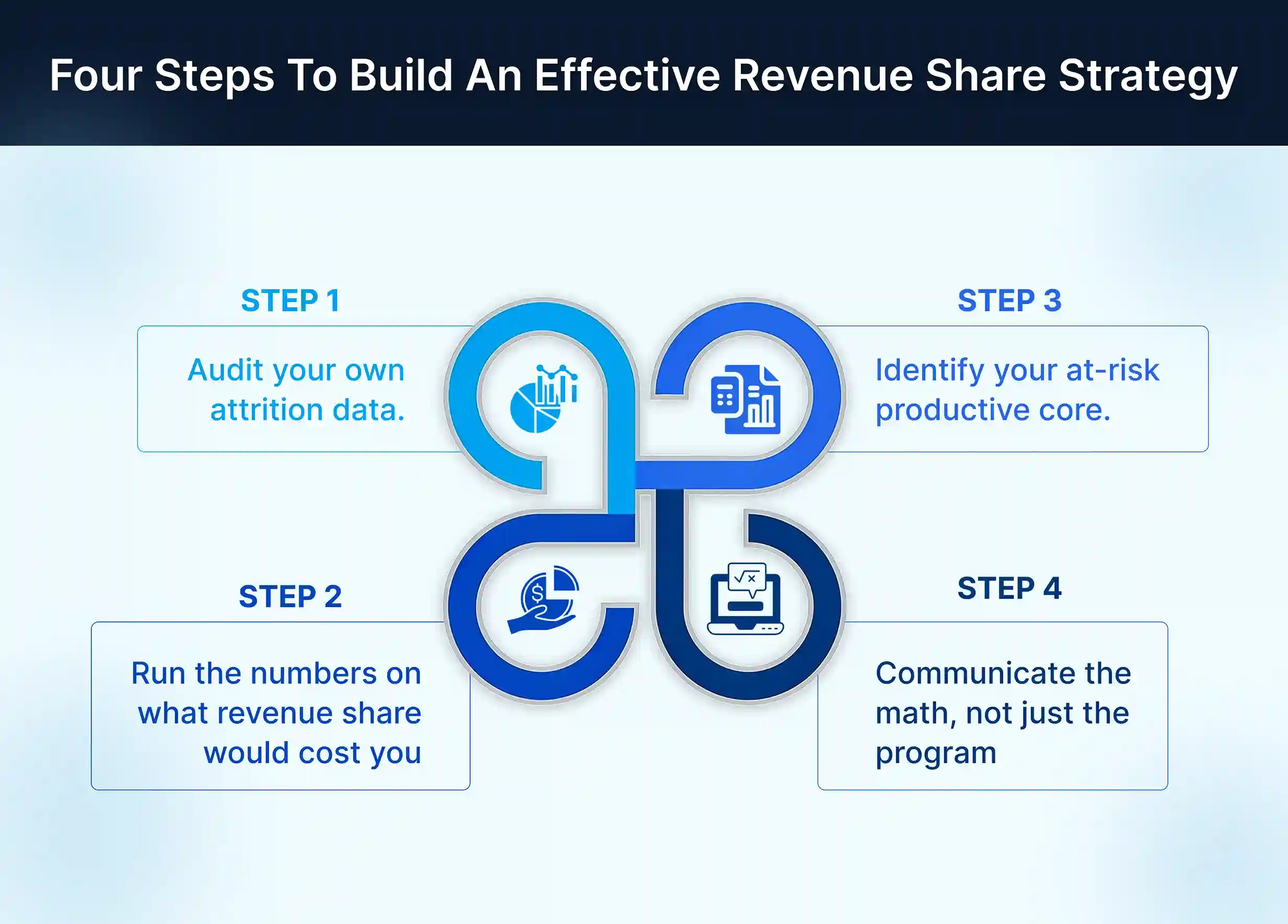
- Audit your own attrition data. Pull the last 24 months of agent departures and classify each one: competitor move, retirement, or unknown/independent. If you can't classify a meaningful share of departures, that's itself a signal - you likely have a Black Hole problem you haven't been measuring.
- Run the numbers on what revenue share would cost you. Most broker-owners overestimate this. A properly structured program is funded by company dollar on new production, not by cutting into existing agent splits.
- Identify your at-risk productive core. Roughly 20% of agents in any brokerage are the consistent producers worth protecting. Build your initial revenue share rollout around giving them the clearest, fastest path to meaningful income.
- Communicate the math, not just the program. Agents won't value revenue share until they can see what it's actually worth to them. A simple calculator illustrating their potential income does more to change minds than a policy document ever will.
See What Revenue Share Could Be Worth to Your Brokerage
Run your own numbers in minutes with the Revenue Share ROI Calculator - built specifically for independent brokerages, not national franchise math.
Calculate Your NumbersThe Bigger Picture: Category Ownership Starts With Naming the Problem
The brokerages that win the next phase of this market won't be the ones with the loudest recruiting pitch. They'll be the ones who recognized, before their competitors did, that the real threat isn't a rival brand - it's the growing perception that brokerage affiliation itself isn't worth the cost.
Revenue share isn't a magic fix for attrition. But it is, structurally, the only retention mechanism available to independent brokerages that directly answers the specific math agents are running when they consider going independent. Brokerages that build this into their value proposition now - before the Independent Black Hole becomes common industry language - will have a meaningful head start with the productive agents every brokerage is trying to keep.
Get the Full Revenue Share Blueprint
Download our 28-page Revenue Share Decision Guide - the complete framework for evaluating, modeling, and implementing a revenue share program built for independent brokerage economics.
Download the GuideTalk Through Your Numbers With Our Team
Book a call to map what a revenue share program could look like for your brokerage - no generic pitch, just your data and your agents.
Book a CallFrequently Asked Questions
Several factors are driving this shift, including commission compression after the 2024 NAR settlement, lower technology barriers to running an independent business, and increasing scrutiny of brokerage fees. Modern compliance, transaction management, and AI-powered tools have made it easier than ever for agents to operate successfully without a traditional brokerage.
When productive agents leave to become independent, brokerages lose recurring commission income, incur recruiting and onboarding costs to replace them, and often experience declining team morale. Unlike agents who move to another brokerage, independent agents rarely return, making these departures particularly costly for long-term profitability.
A well-designed revenue share program transforms brokerage affiliation from a cost into an additional income opportunity. By rewarding agents for recruiting, mentoring, and supporting others, revenue share creates long-term financial incentives that encourage agents to remain with the brokerage instead of going independent.
Brokerage owners should begin by analyzing their attrition data to identify how many agents are leaving for independence, calculate the financial impact of those departures, identify their highest-value producers, and implement retention strategies such as revenue sharing that demonstrate measurable value beyond commission splits.
Simply offering better commission splits does not address the core question many agents are asking: "What value am I receiving from my brokerage?" As more agents prioritize long-term financial opportunities, professional support, and business growth, brokerages need differentiated value propositions—such as revenue share, mentorship, and community—to remain competitive.
Share this blog


Popular topics
Efficiency
Growth
Compliance
Technology
Agents
Trends




 +1 (765) 896-5271